Skip to content
PMTCustomer login

Metering hardware

Instruments designed for the system they feed.

Meteringonline reads any major meter — but PMT designs its own range, because knowing exactly how an instrument behaves is the difference between data you can bill on and data you have to argue about. Every meter we supply is calibrated in our own SANAS-accredited laboratory before it leaves us.

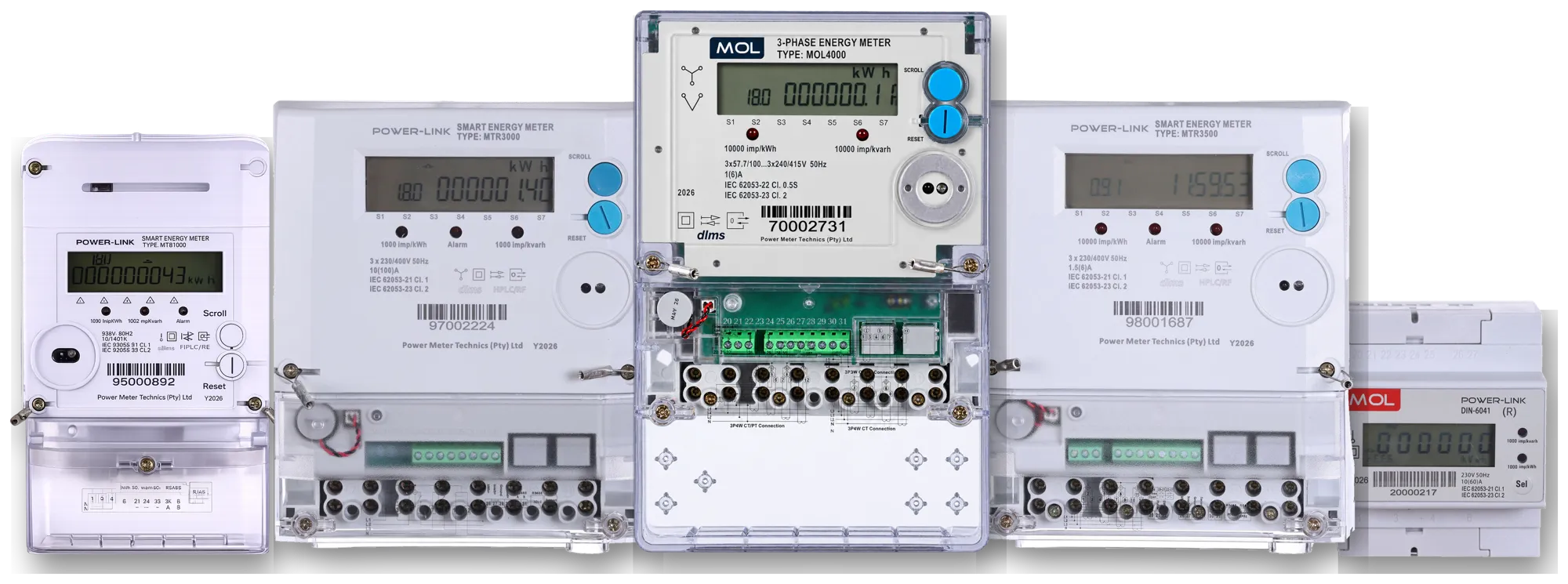
Smart meters — at the supply point

The revenue meter where the utility's supply enters the property. Communicates over power line or RF to a data concentrator, carries time-of-use tariffs, logs events and tamper attempts, and — on direct-connected models — can disconnect and reconnect remotely. This is the meter the bill is raised against.

DIN sub-meters — inside the board

Compact rail-mounted meters for measuring what happens downstream of the supply point: individual tenants, floors, plant, chillers, common area. Wired over RS-485 to a gateway rather than communicating over the grid, and sized so that many fit in one distribution board.

Most installations use both: a smart meter proving what the utility supplied, and DIN sub-meters apportioning it to whoever actually consumed it. The two together are what make tenant recovery reconcile.

Smart meters

DLMS/COSEM throughout, four-quadrant measurement, twelve-channel load profile, full event and tamper logging, and a replaceable battery-backed real-time clock.

MTR1000 energy meter

MTR1000

Single-phase, direct connected

Residential and small commercial supply points on an AMI rollout.

Supply
230 V
Current
10(100) A
Accuracy
Class 1 active · Class 2 reactive
Switching
120 A integrated load switch
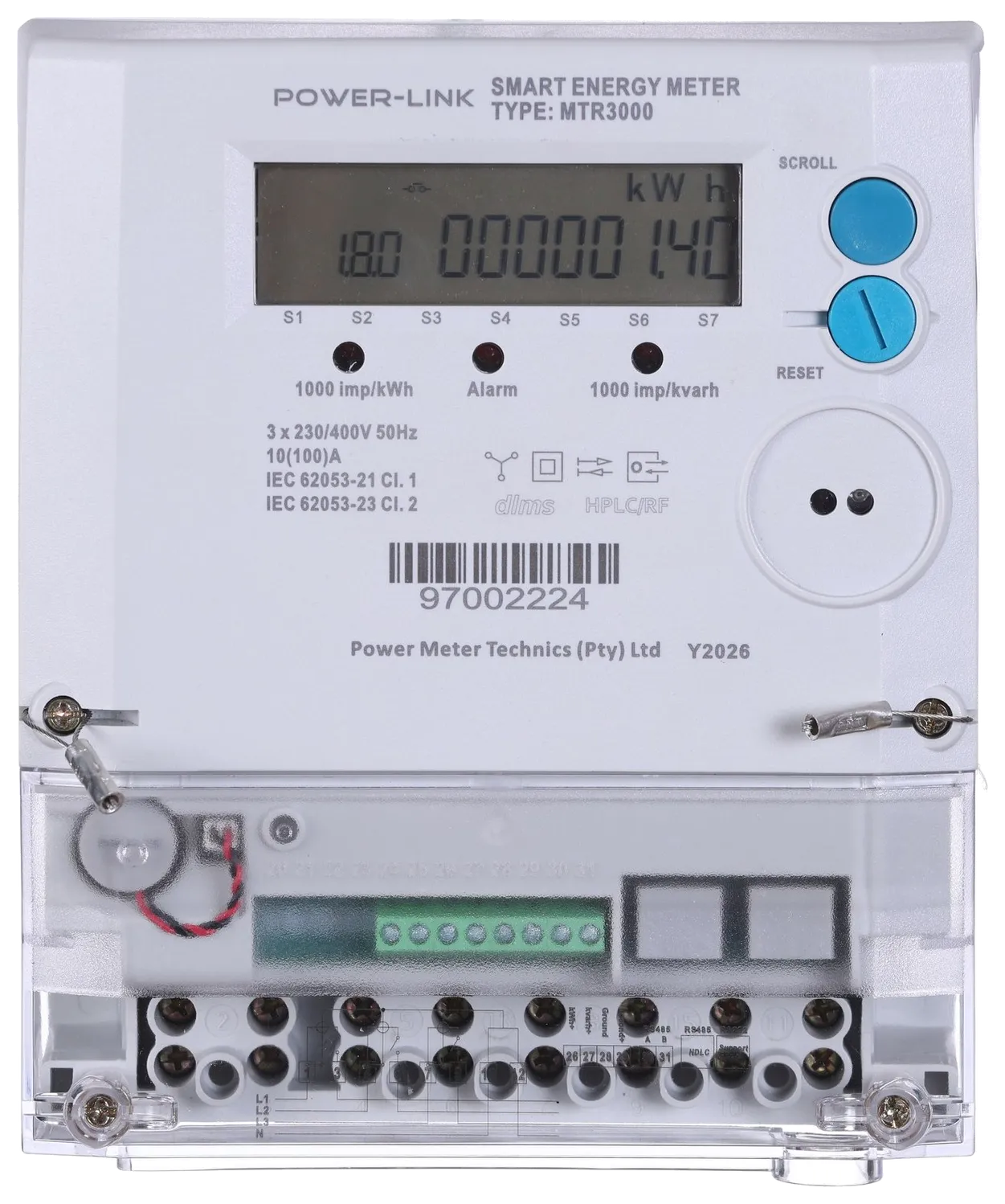
MTR3000 energy meter

MTR3000

Three-phase, direct connected

Three-phase supplies where load is within the meter's direct range — small commercial and light industrial.

Supply
3 × 230/400 V
Current
10(100) A
Accuracy
Class 1 active · Class 2 reactive
Switching
120 A integrated load switch
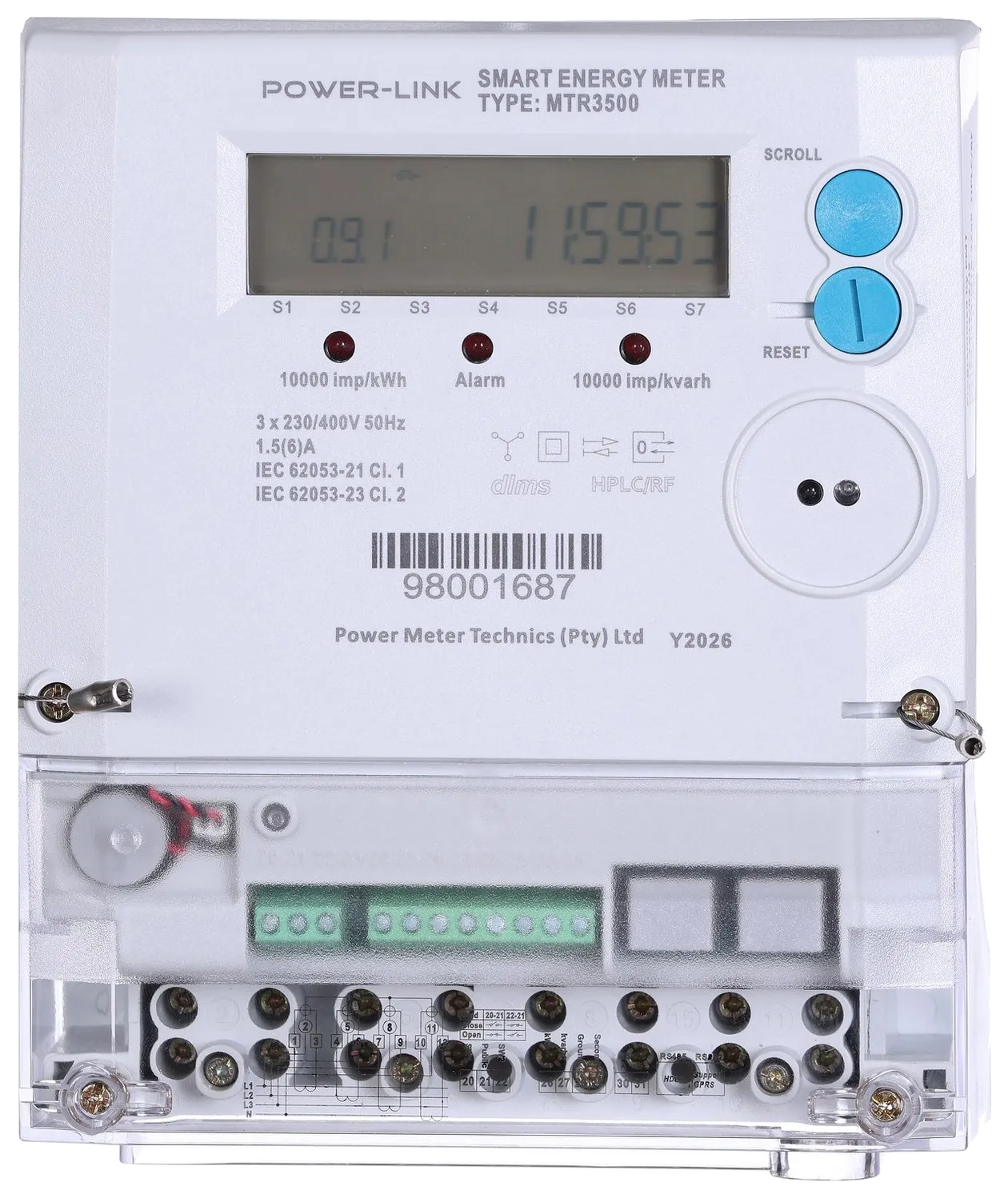
MTR3500 energy meter

MTR3500

Three-phase, CT connected

Large commercial and industrial intakes, where current is measured through current transformers.

Supply
3 × 230/400 V
Current
1.5(6) A via CTs
Accuracy
Class 1 active · Class 2 reactive
Switching
Signal relay (KYZ) only
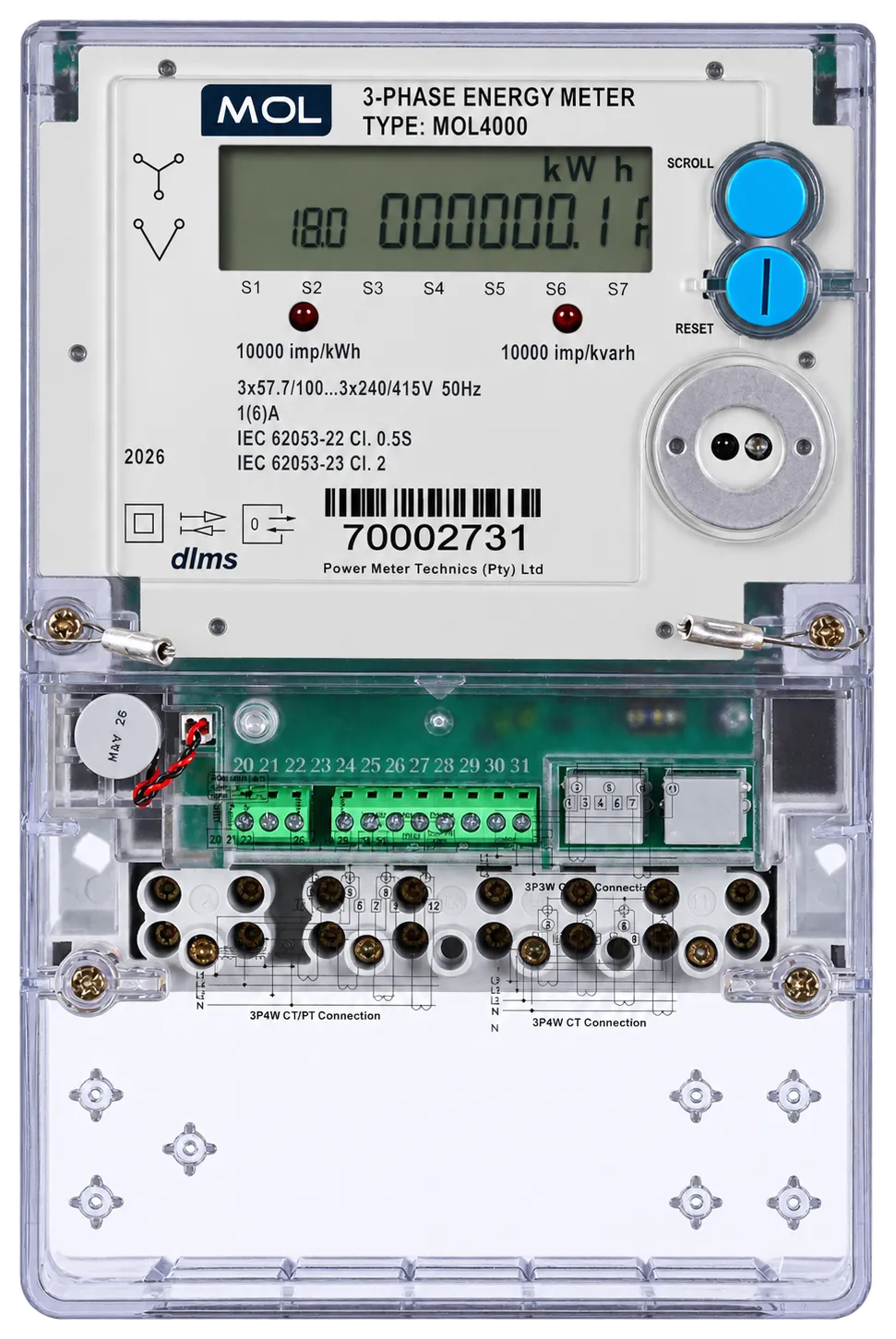
MOL4000 energy meter

MOL4000

Three-phase, CT or CT/VT — high accuracy

Revenue metering at MV intake and bulk supply points, including 11 kV via voltage transformers. Also the reference-grade meter for check metering and bill verification.

Supply
3 × 57.7/100 V – 3 × 240/415 V
Current
1(6) A
Accuracy
Class 0.5S active · Class 2 reactive
Interfaces
Optical · RS-485 · optional cellular

DIN-rail sub-meters

Class 1 active and Class 2 reactive, Modbus RTU over RS-485, four tariff registers and a four-channel load profile. Approved as revenue meters, so a landlord can bill a tenant on them.

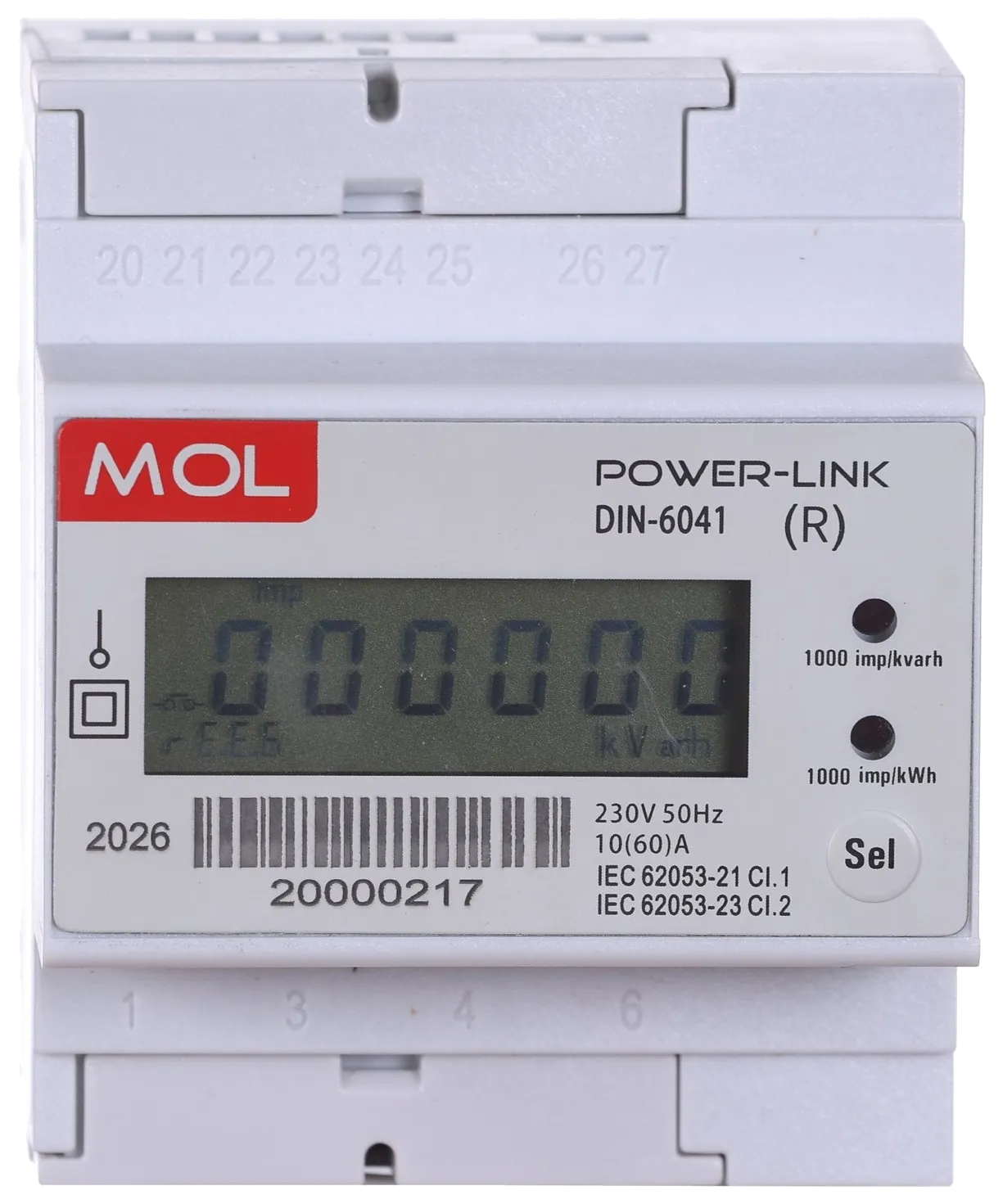
DIN-6041 DIN-rail meter

DIN-6041

Single-phase, direct

Supply
230 V
Current
10(60) A
Width
72 mm
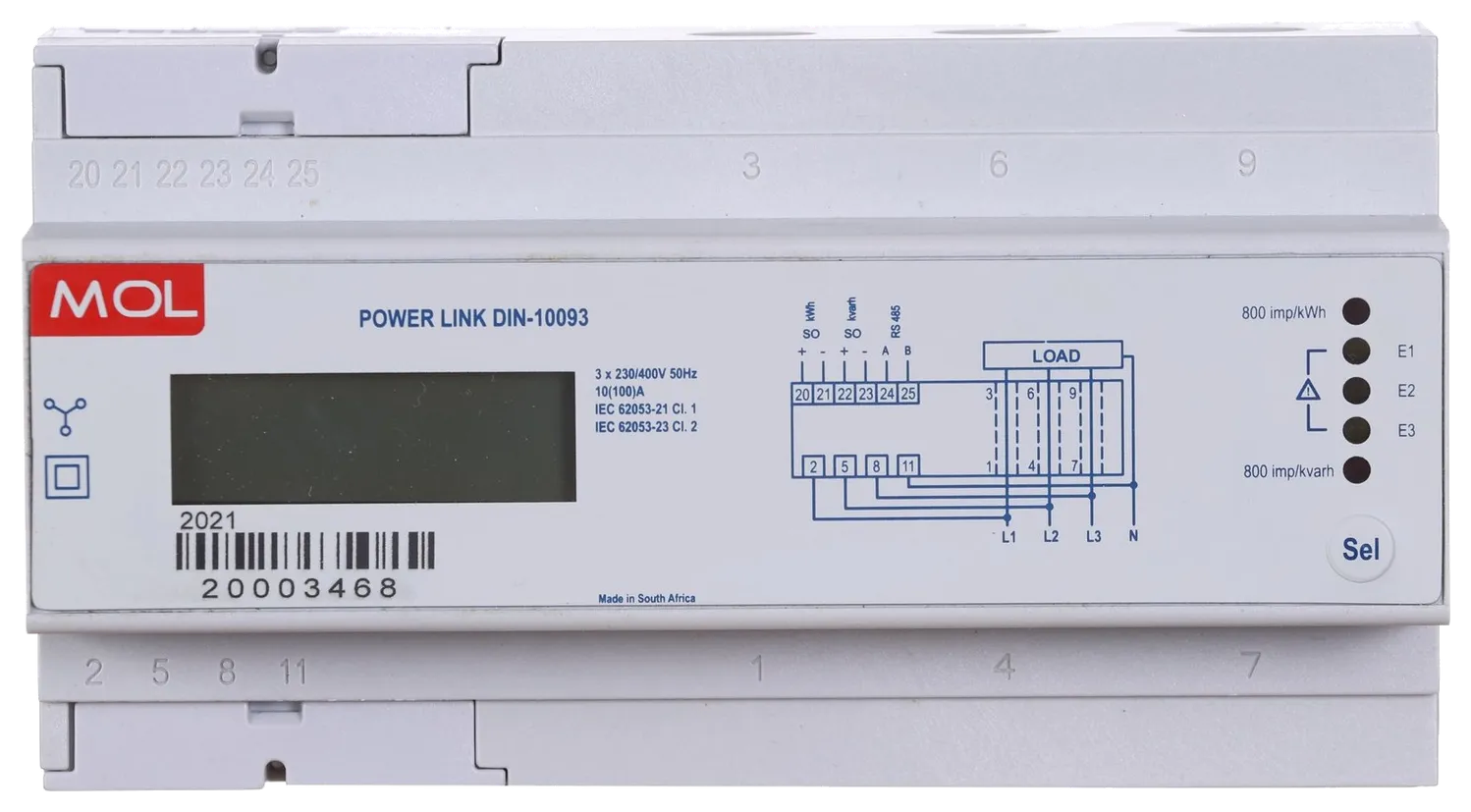
DIN-10093 DIN-rail meter

DIN-10093

Three-phase, pass-through

Supply
230(400) V
Current
10(100) A
Width
162 mm
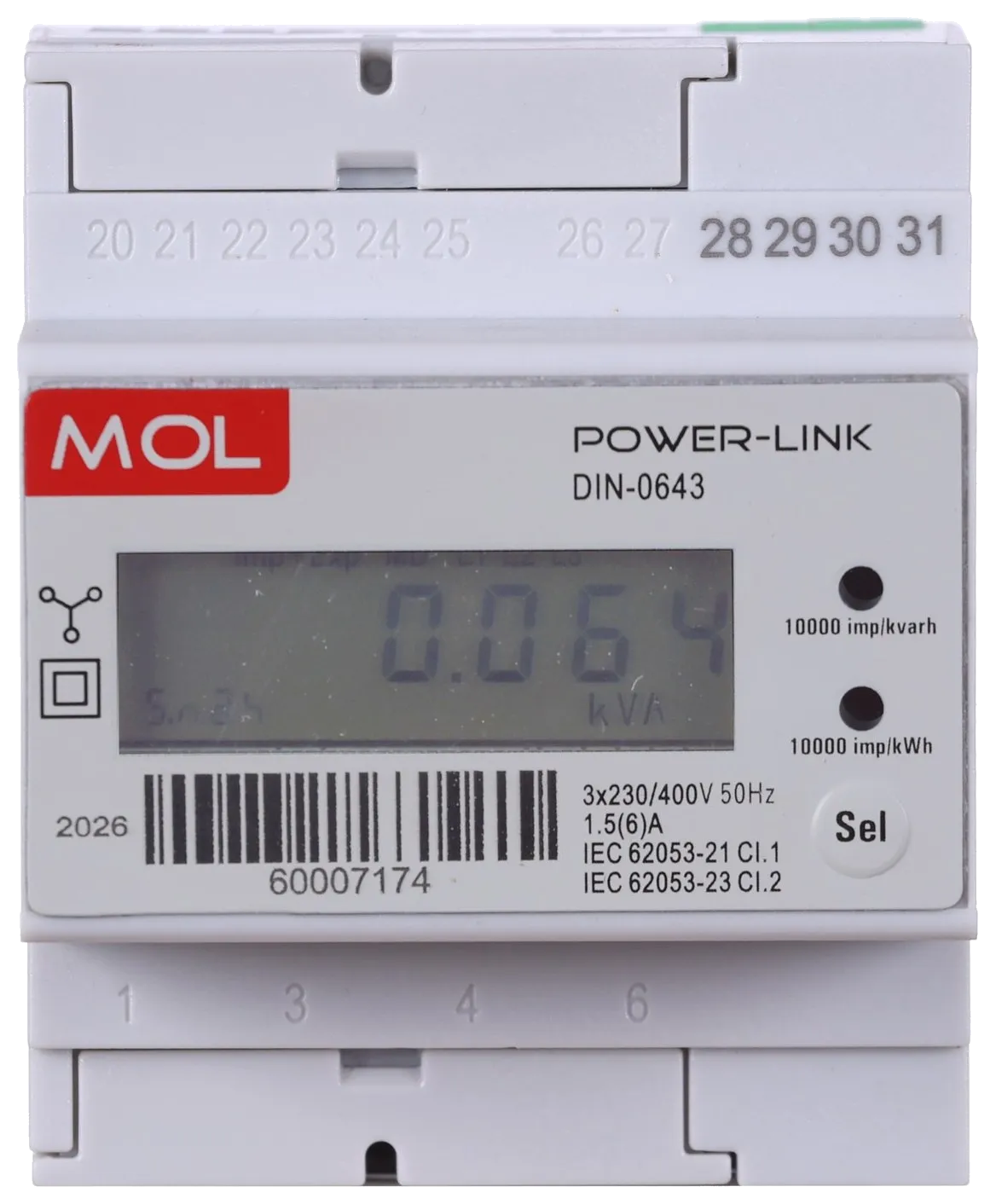
DIN-0643 DIN-rail meter

DIN-0643

Three-phase, CT connected

Supply
230(400) V
Current
1.5(6) A via CTs
Width
72 mm

The data concentrator

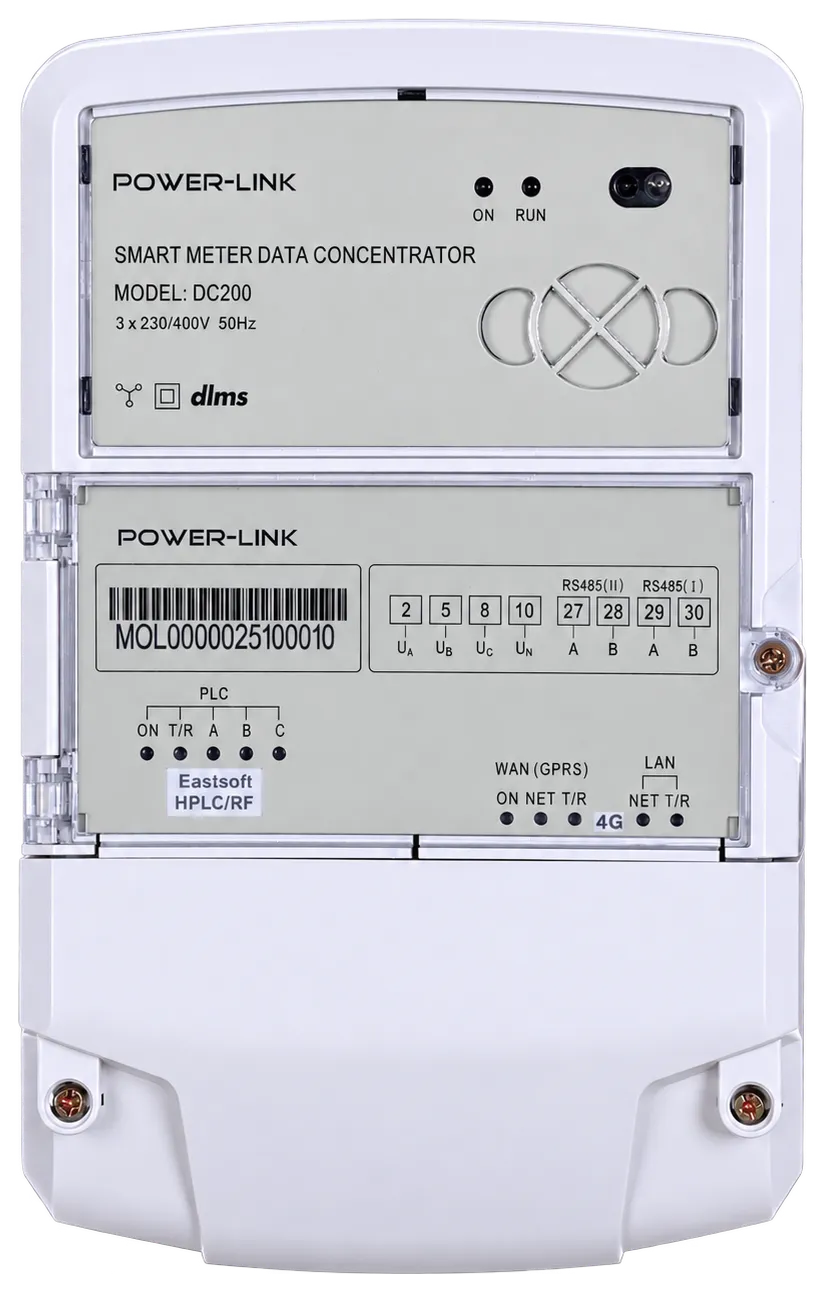
POWER-LINK DCU

Smart meters on a power line network don't each need their own SIM card. They form a mesh across the existing low-voltage reticulation — every meter able to act as a repeater — and report to a data concentrator at the transformer or intake.

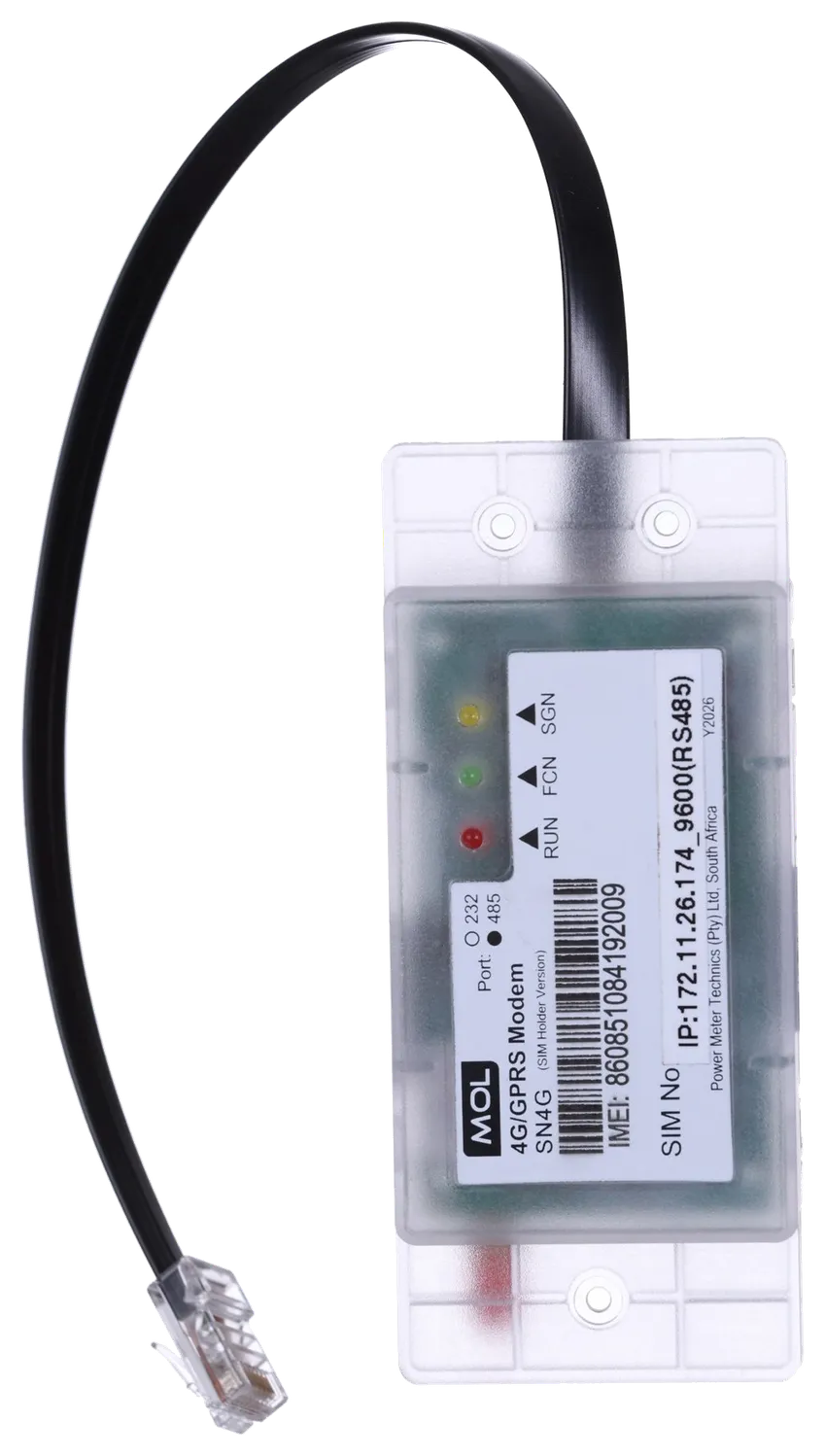
The concentrator manages the mesh, collects from up to roughly a thousand meters, and carries the aggregated data back to Meteringonline over a single cellular connection. One backhaul link instead of a thousand, in a dense installation.

It speaks DLMS/COSEM to the meters and to the head end, over IPv6 and 6LoWPAN, so the same data model runs end to end from the instrument to the invoice.

Power line mesh topologyMeters interconnect across the low-voltage reticulation, each able to repeat for its neighbours, and report to a single data concentrator. The concentrator carries the aggregated data to Meteringonline over one cellular connection.MeterMeterMeterMeterMeterMeterMeterMeterConcentrator4GMOLG3-PLC mesh over the existing reticulationOne backhaul, not one per meterup to ~1 024 meters
Every meter can repeat for its neighbours, so a meter out of range of the concentrator still reports through the ones that are.
Meters per concentrator
~1 024
Meter-side network
G3-PLC mesh
Data model
DLMS/COSEM
Backhaul
4G / GPRS

Every meter is calibrated before it ships.

A specification is a claim about a population. A calibration certificate is a measurement of the instrument you were actually sent. PMT calibrates in its own laboratory, accredited by SANAS to ISO/IEC 17025 since 1995, to a measurement uncertainty of ±0.03% — and you get the certificate.

The calibration laboratory